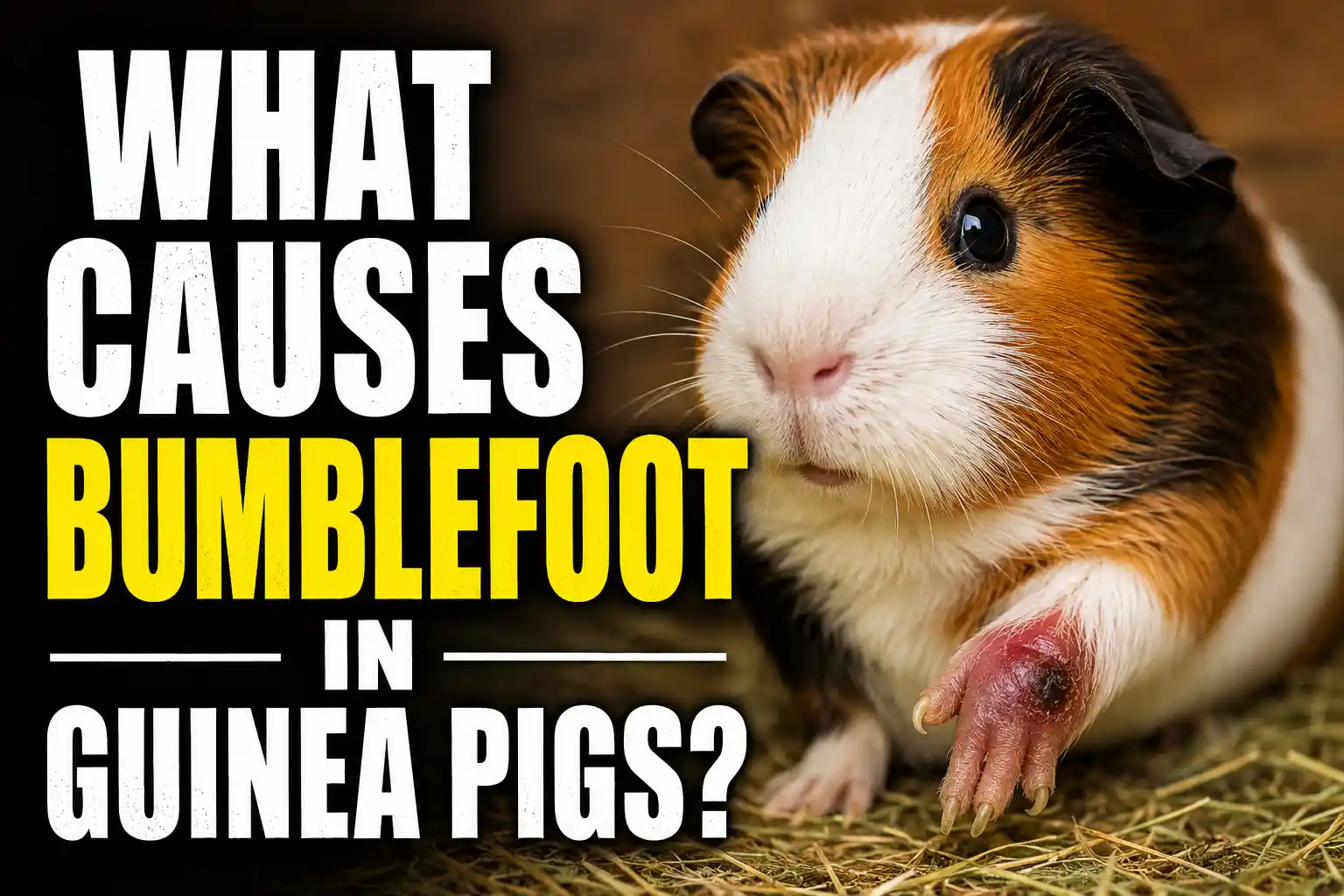
Bumblefoot is one of the most common foot problems guinea pigs can face, and it can become serious if ignored. I learned that even small care mistakes, like wet bedding or long nails, can lead to sore and painful feet. If you are wondering what causes bumblefoot in guinea pigs, knowing the early causes can help you prevent it and keep your pet healthy, active, and comfortable.
Table of Contents
How I First Noticed Bumblefoot in My Guinea Pig?
I still remember the first time I noticed something was off with my guinea pig. It was during my usual Sunday cage cleaning routine. He seemed quieter than normal and stayed tucked into his favorite corner instead of running over for veggies like he always did. When I picked him up for a quick check, I noticed a small red patch on the bottom of one foot. At first, I thought maybe he had stepped on something rough. Looking back, that tiny red mark was the first clear warning sign that bumblefoot was starting.
At that point, I had heard of guinea pig bumblefoot, but I had never dealt with it myself. I assumed it was only something that happened in very poor cage setups. That experience taught me that even small care mistakes can lead to foot problems. It does not always happen because of neglect. Sometimes it builds slowly from little things we overlook. Learning what causes bumblefoot in guinea pigs helped me fix the issue before it became serious.
What Is Bumblefoot in Guinea Pigs?
Bumblefoot, also known as pododermatitis, is a painful condition that affects the bottom of a guinea pig’s feet. It usually starts with redness or slight irritation on the foot pad. If it is not treated early, the skin can crack or develop sores. Once the skin breaks, bacteria can enter and cause infection. This can lead to swelling, pain, and difficulty walking.
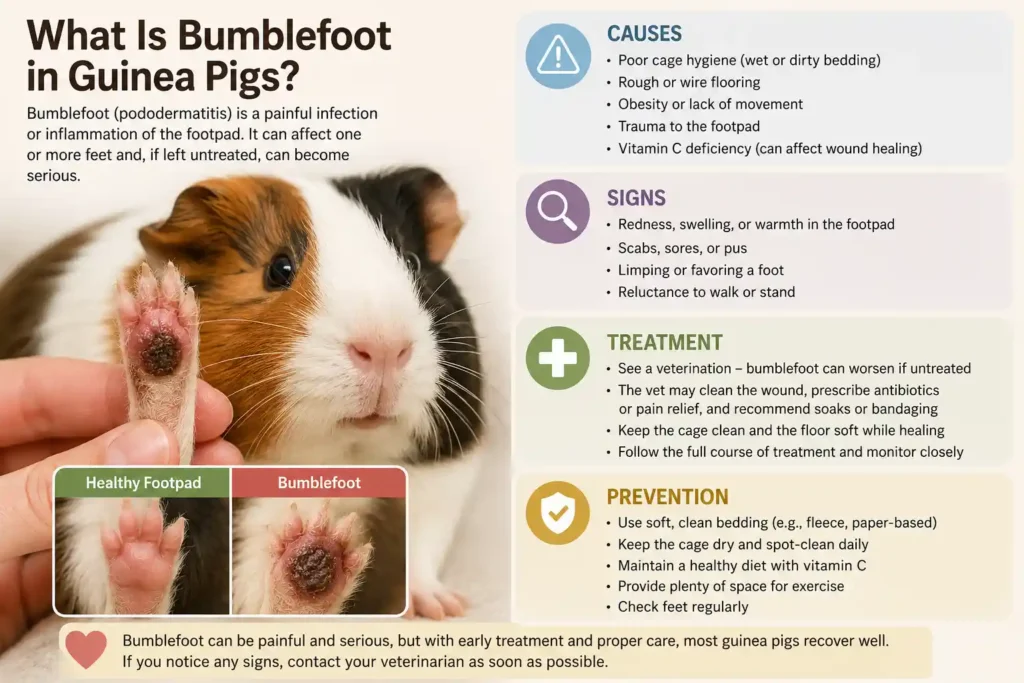
What surprised me most was how subtle the early signs were. My guinea pig did not cry out or limp dramatically. He simply moved less and rested more often than usual. Guinea pigs are prey animals, so they naturally hide pain very well. That makes regular foot checks so important. Catching bumblefoot early can make a huge difference in recovery and prevent more painful complications later.
The Main Cause of Bumblefoot in Guinea Pigs Is Pressure on the Feet
The biggest thing I learned is that bumblefoot often starts with repeated pressure on the same part of the foot. Guinea pigs spend almost their entire lives standing or sitting on cage surfaces. If that surface is too hard, rough, or uneven, the foot pads take constant stress. Over time, this pressure irritates the skin and weakens it. Once the skin becomes damaged, infection can develop quickly.
I noticed this in my own setup when I switched to a liner that looked soft but actually had very little padding. It felt fine to my hand, so I assumed it was comfortable. My guinea pig’s feet told a different story. After replacing it with thicker fleece and absorbent layers, I noticed his movement improved within days. That simple change taught me how much flooring matters for guinea pig foot health.
| Cage Surface Type | Risk Level for Bumblefoot |
|---|---|
| Thick fleece with padding | Low |
| Soft paper bedding | Low |
| Thin plastic liner | Medium |
| Hard rough flooring | High |
| Wire flooring | Very High |
Wet Bedding Creates the Perfect Problem
One thing I underestimated was how quickly damp bedding can cause trouble. There was one week when life got busy, and I delayed a deep cage clean by just a day. The corner under the water bottle became damp, and I did not notice right away. My guinea pig loved resting there because it was close to his hay pile. That damp area softened the skin on his feet and made irritation much worse.
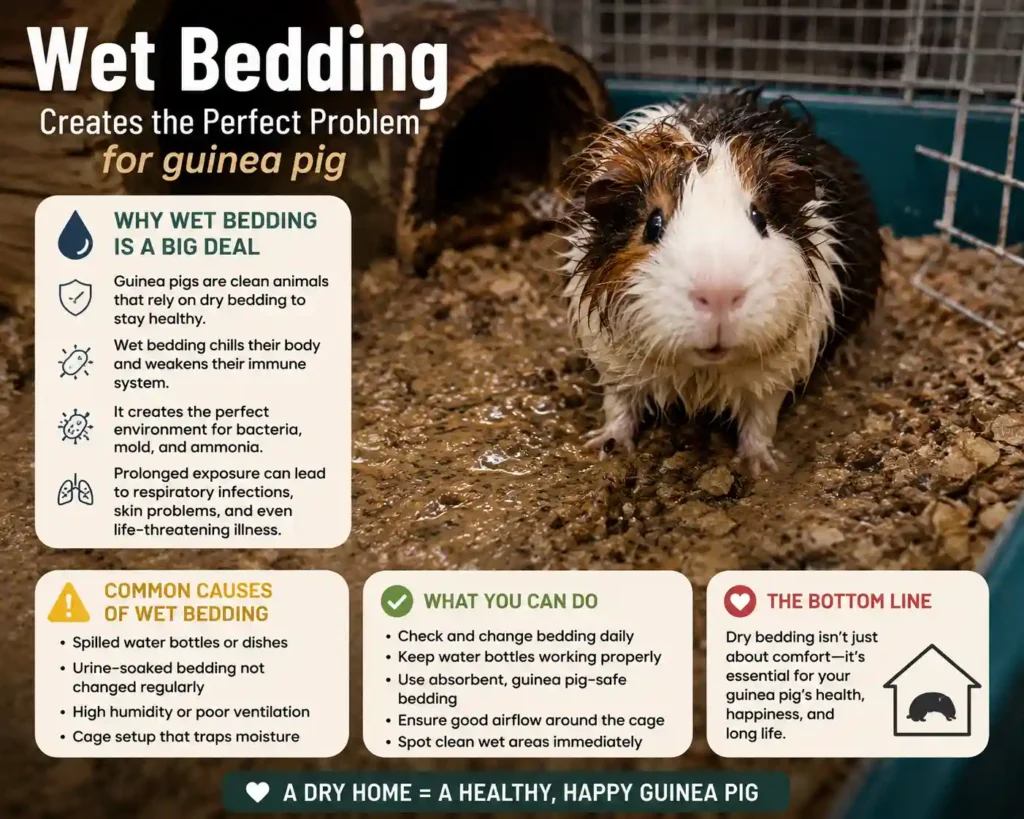
Moisture weakens the natural barrier of the skin. Once the skin stays soft for too long, it becomes easier for friction to cause tiny cracks. Those cracks can allow bacteria to enter. Since then, I check all damp spots every morning. It only takes a few minutes, but it has become one of the most important parts of my daily guinea pig care routine.
Being Overweight Adds More Pressure
I also learned that weight plays a bigger role than most owners realize. My guinea pig had become slightly rounder over time because I was giving him extra fruit treats. It felt harmless because he always looked so excited for them. The vet explained that carrying extra weight increases pressure on the feet. More pressure means more irritation and a greater risk of developing sore spots.
Once I reduced sugary treats and focused more on hay and fresh vegetables, I noticed a clear difference. He became more active and moved around with more energy. Healthy weight management is not just about overall health. It directly affects foot health too. That was something I had never really thought about until I saw it firsthand.
| Weight Status | Effect on Foot Pressure |
|---|---|
| Healthy weight | Normal pressure |
| Slightly overweight | Increased strain |
| Obese | High risk of sores |
Lack of Movement Can Make Bumblefoot Worse
There was a stretch of rainy days when I skipped floor time because setting up his play area felt like extra work. I thought missing a few days would not matter. I was wrong. My guinea pig spent more time sitting in the same area of the cage, and that constant pressure on the same spots made irritation worse.
Guinea pigs need movement throughout the day. Walking helps spread pressure evenly across the feet. It also keeps muscles strong and helps prevent weight gain. Since that experience, I make sure my guinea pig gets daily exercise, even if it is just a short indoor play session. Staying active is one of the simplest ways to reduce the risk of bumblefoot.
Long Nails Can Change How Guinea Pigs Walk
This was something I did not fully understand until I saw it myself. When guinea pig nails grow too long, they change foot posture. Instead of placing their feet flat, they shift their weight awkwardly to compensate. That uneven pressure creates stress on certain parts of the foot and increases irritation.
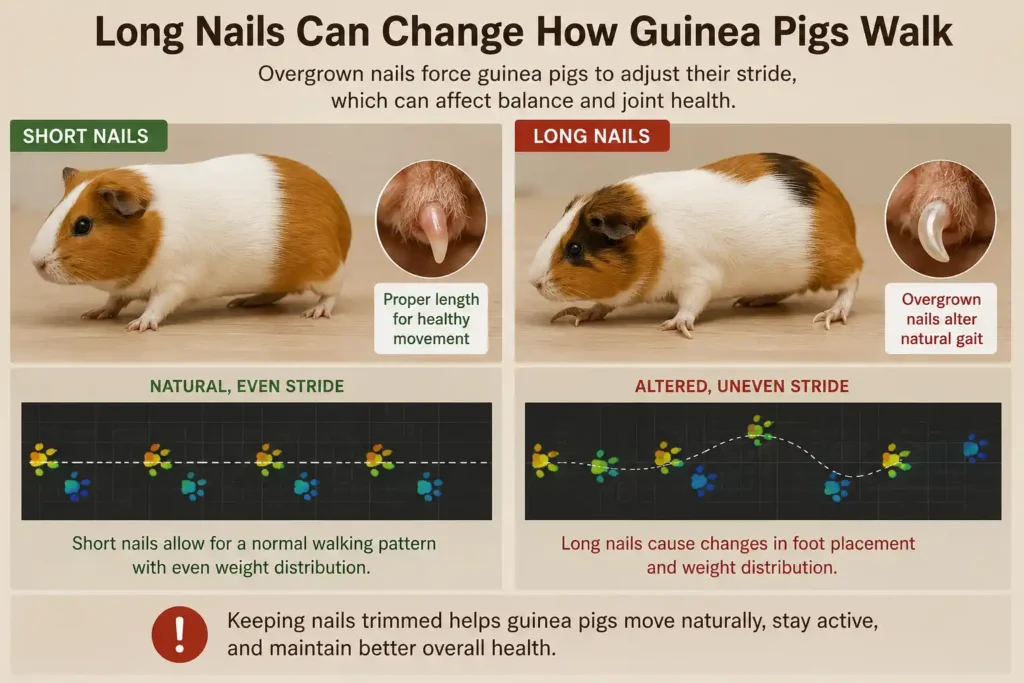
I had delayed one nail trim because his nails did not look too bad at first glance. A week later, I noticed he was standing differently. After trimming them, his posture improved almost right away. Now I check nail length every two weeks. It is a small habit, but it helps keep weight distributed properly and protects his feet from unnecessary strain.
Poor Cage Hygiene Lets Bacteria Grow
Cleanliness is one of the biggest factors in preventing guinea pig bumblefoot. Even if the cage surface is soft, a dirty environment allows bacteria to build up. Small scratches or irritated spots can become infected much faster when waste and moisture are present. That was a lesson I learned after missing some hidden wet bedding under a fleece fold.

Now I do quick daily spot checks and a full clean on schedule. It keeps the cage dry and fresh, and it gives me a chance to inspect his feet often. Good hygiene does more than keep the cage smelling nice. It creates a safer environment where minor irritation can heal instead of becoming a painful infection.
Vitamin C Deficiency Makes Healing Harder
Guinea pigs cannot produce their own vitamin C, so they need it every single day. I used to rely too heavily on pellets, assuming they provided enough. Over time, I learned that vitamin C levels in pellets can drop as they age. Fresh foods became a much bigger part of my feeding routine after that.
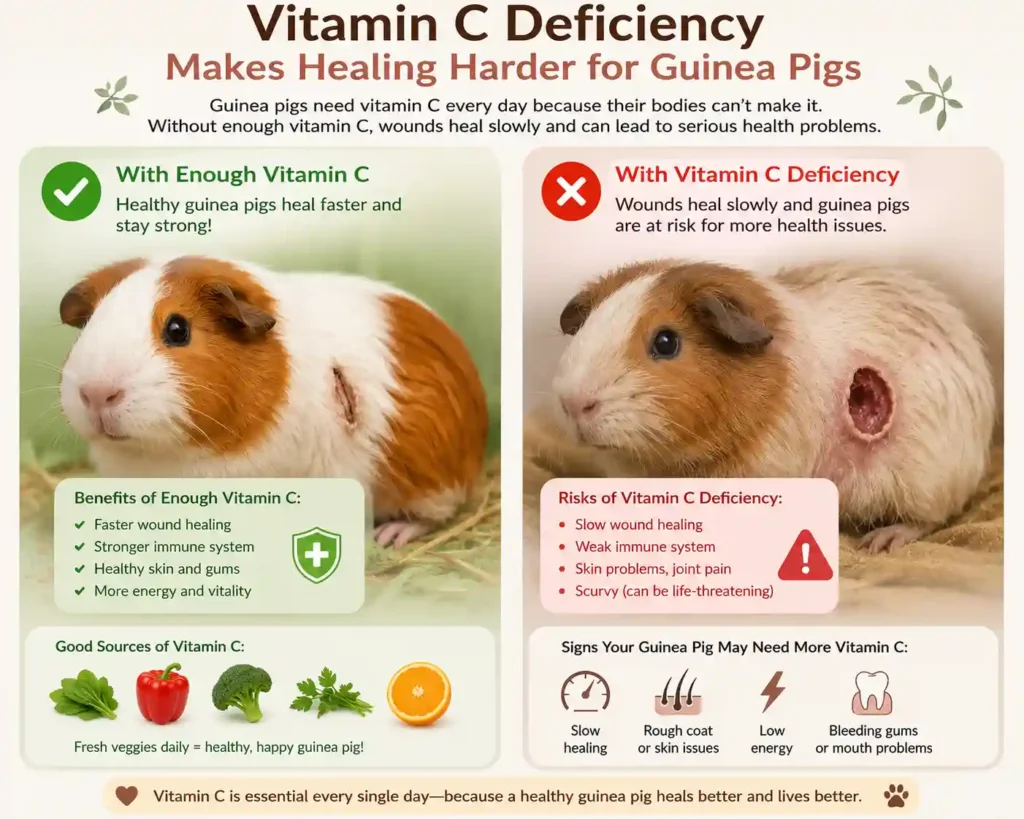
Bell peppers quickly became a daily staple in my house. I also added leafy greens and made sure pellets were always fresh. Better nutrition helped improve my guinea pig’s skin health and healing ability. Strong skin is more resistant to irritation, which lowers the chance of bumblefoot developing in the first place.
The Biggest Lesson I Learned About What Causes Bumblefoot in Guinea Pigs
If there is one thing my experience taught me, it is that bumblefoot rarely happens because of one major mistake. It usually comes from several small issues adding up over time. A slightly damp corner, a delayed nail trim, less exercise, or extra weight can combine to create the perfect conditions for foot sores.
Now I check my guinea pig’s feet as part of our regular bonding time. It only takes a minute, but it gives me peace of mind. If you are wondering what causes bumblefoot in guinea pigs, the answer is usually daily pressure, moisture, and overlooked care habits. The good news is that most cases can be prevented with small, consistent changes. Catching early signs made all the difference for me, and it can for your guinea pig too.
FAQs About What Causes Bumblefoot in Guinea Pigs
What is the main cause of bumblefoot in guinea pigs?
The main cause of guinea pig bumblefoot is too much pressure on the feet. Hard cage floors, wet bedding, and poor movement can slowly damage the foot pads.
Can wet bedding cause guinea pig bumblefoot?
Yes, wet bedding is a common cause of guinea pig bumblefoot. Damp spots soften the skin and make it easy for small cuts to turn into sore, infected foot pads.
Does long nail length increase bumblefoot risk?
Yes, long nails can raise the risk of bumblefoot in guinea pigs. They change how your guinea pig walks and put extra pressure on parts of the foot.
How can I prevent bumblefoot in guinea pigs?
Use soft bedding, keep the cage dry, trim nails often, and give daily exercise. These simple guinea pig care steps help protect foot pads from sores.
Can overweight guinea pigs get bumblefoot more easily?
Yes, extra weight puts more stress on guinea pig feet. This added pressure can cause sore spots and make bumblefoot more likely over time.
How often should I check my guinea pig’s feet?
Check your guinea pig’s feet at least once each week. Regular checks help you spot redness, dry skin, or early bumblefoot before it gets worse.
Can guinea pig bumblefoot heal on its own?
Mild guinea pig bumblefoot may improve with fast cage care changes. If swelling or sores appear, it is best to get proper treatment right away.