
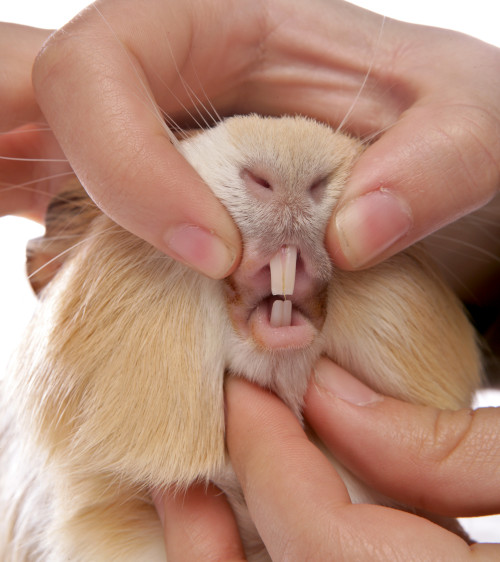
Guinea pig teeth overgrow because their molars and incisors keep growing without enough wear.
I’ve cared for guinea pigs for years and helped many owners solve dental overgrowth. This article explains why are my guinea pig’s teeth too long? — from anatomy and common causes to home care, vet treatment, and prevention. Read on to learn clear steps you can take now to protect your piggy’s mouth and health.
How guinea pig teeth grow and why length matters
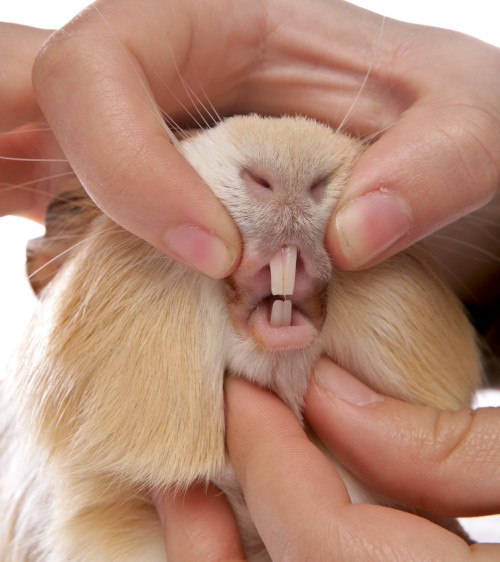
Guinea pigs have teeth that never stop growing. Their front teeth (incisors) and back teeth (cheek teeth or molars) grow continuously. Normal chewing wears the teeth down. If chewing is reduced or tooth alignment is wrong, teeth overgrow. Overgrown teeth can make eating painful and cause weight loss, drooling, and sores.
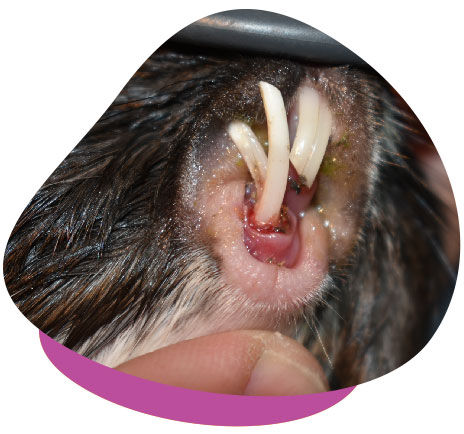
Why are my guinea pig’s teeth too long? Often it is a sign of imbalance between growth and wear. Left untreated, long teeth lead to sharp points, mouth ulcers, and severe health decline.
Main causes of overgrown teeth
Below are the common reasons why are my guinea pig’s teeth too long?
Poor diet and lack of hay
- A diet low in coarse hay means the teeth do not get enough abrasive wear.
- Young pellets or soft treats alone do not grind teeth down.
Malocclusion (misalignment)
- Natural jaw misalignment causes uneven wear.
- Malocclusion can be hereditary or develop over time.
Chewing injuries and habits
- Avoiding chewing after mouth pain reduces wear and lets teeth lengthen.
- Chewing on inappropriate items can chip or shift teeth.
Dental disease and infection
- Abscesses or infections can change how a pig chews.
- Pain from dental issues leads to less grinding and faster overgrowth.
Trauma or previous dental work
- Broken teeth or bad trims can alter bite and cause uneven growth.
- Repeated poor trimming without correcting alignment makes the issue worse.
Age and genetics
- Some guinea pigs naturally have faster tooth growth or jaw shapes that predispose them to problems.
Signs and symptoms to watch for
Know the red flags so you can answer: why are my guinea pig’s teeth too long?
- Reduced appetite or picky eating.
- Drooling or wet fur around the mouth.
- Weight loss or failing to thrive.
- Whisker or cheek fur matted with food.
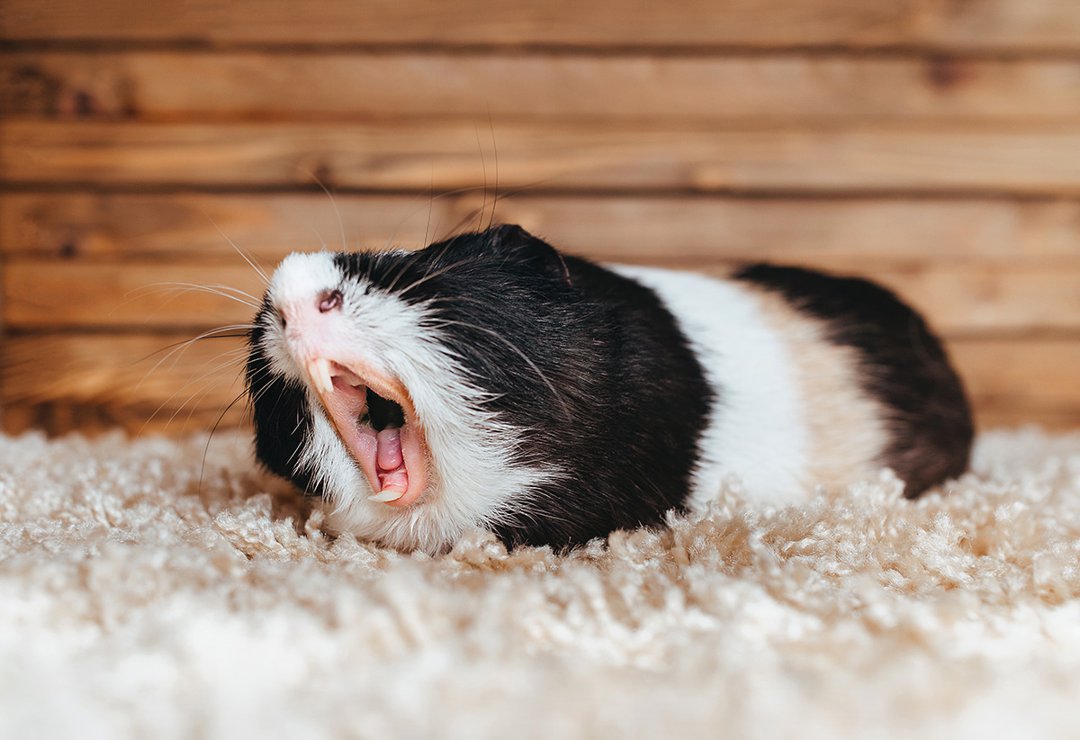
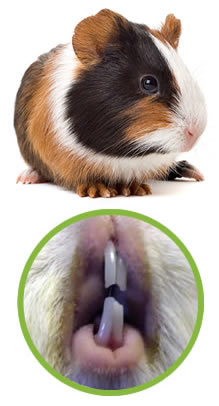
- Visible long incisors or points inside the mouth.
- Eye discharge or nasal signs (can signal dental abscess).
If you spot any of these, check the mouth carefully and contact a vet. Early action prevents pain and complex treatments.
How vets diagnose and treat long teeth
Veterinarians follow a clear path to diagnose why are my guinea pig’s teeth too long?
- Visual exam and oral inspection under gentle restraint or light sedation.
- Dental X-rays to assess molars, roots, and jaw alignment.
- Assessment for infections or abscesses.
Common treatments
- Trimming or filing teeth to correct length and remove sharp points.
- Corrective reduction of molar spurs under anesthesia when needed.
- Extraction of severely damaged or infected teeth.
- Antibiotics and pain relief for infections or after surgery.
- Follow-up care and monitoring for recurrence.
Treatment must be done by a vet experienced with small herbivores. Improper trimming can crack teeth or worsen alignment.

At-home care, prevention, and practical tips
You can greatly reduce the chance you’ll ask, why are my guinea pig’s teeth too long? by changing daily care.
Diet and chewing
- Offer unlimited high-quality timothy or orchard grass hay.
- Provide a measured daily portion of guinea pig pellets for balanced nutrition.
- Limit soft treats and fruits to small amounts.
- Give safe chew toys made for small herbivores to encourage grinding.
Routine checks and handling
- Look inside the mouth weekly with a flashlight.
- Check incisors for uneven length and cheek teeth for drooling or bad breath.
- Weigh your pig weekly to catch weight loss early.
Environmental tips
- Use chew-safe wooden blocks or woven grass mats.
- Replace bedding and toys that could hide dental problems.
My experience
- I once had a piggy named Maple who stopped eating carrots. A quick vet visit found long molar spurs. After a single professional trim and a hay boost, Maple was back to eating within two days. The key lesson: act quickly and rely on a vet for dental work.
Small changes in diet and routine make a big difference in preventing overgrowth.
When to seek immediate veterinary care
If you wonder why are my guinea pig’s teeth too long? and your pet shows any of the signs below, see a vet right away.
- Sudden refusal to eat or drink.
- Severe drooling or blood in the mouth.
- Rapid, marked weight loss.
- Swelling under the jaw or along the mouth line.
Prompt care reduces pain and the need for invasive procedures.

Frequently Asked Questions of Why are my guinea pig’s teeth too long?
What causes guinea pig teeth to overgrow so fast?
Teeth overgrow when wear does not match the continuous growth. Poor hay intake, jaw misalignment, or dental disease are common causes.
Can I trim my guinea pig’s teeth at home?
You should not trim teeth at home. Improper tools or technique can crack teeth or cause pain; see a vet or experienced technician.
How often do guinea pigs need dental checks?
Check your guinea pig’s mouth weekly and schedule a vet dental check at least once a year, or sooner if you notice problems.
Will a diet change fix overgrown teeth?
A better diet with plenty of hay helps prevent overgrowth but cannot correct severe malocclusion or existing dental disease alone.
Is tooth extraction common in guinea pigs?
Extraction is sometimes necessary for badly damaged or infected teeth. Vets aim to preserve as much of the tooth as possible but will extract when it improves quality of life.
Can genetics make teeth too long?
Yes. Some guinea pigs inherit jaw shapes or tooth growth rates that predispose them to overgrowth and recurring dental care.
Conclusion
Long teeth in guinea pigs are usually preventable with a good diet, regular checks, and fast vet care when issues start. If you keep asking, why are my guinea pig’s teeth too long?, use this guide to inspect, act, and prevent problems. Start with unlimited hay, weekly mouth checks, and a trusted exotic vet. Take action early, and your guinea pig will enjoy a healthy, happy life.
Please share your experiences or questions in the comments, and consider subscribing for more practical small-pet care tips.