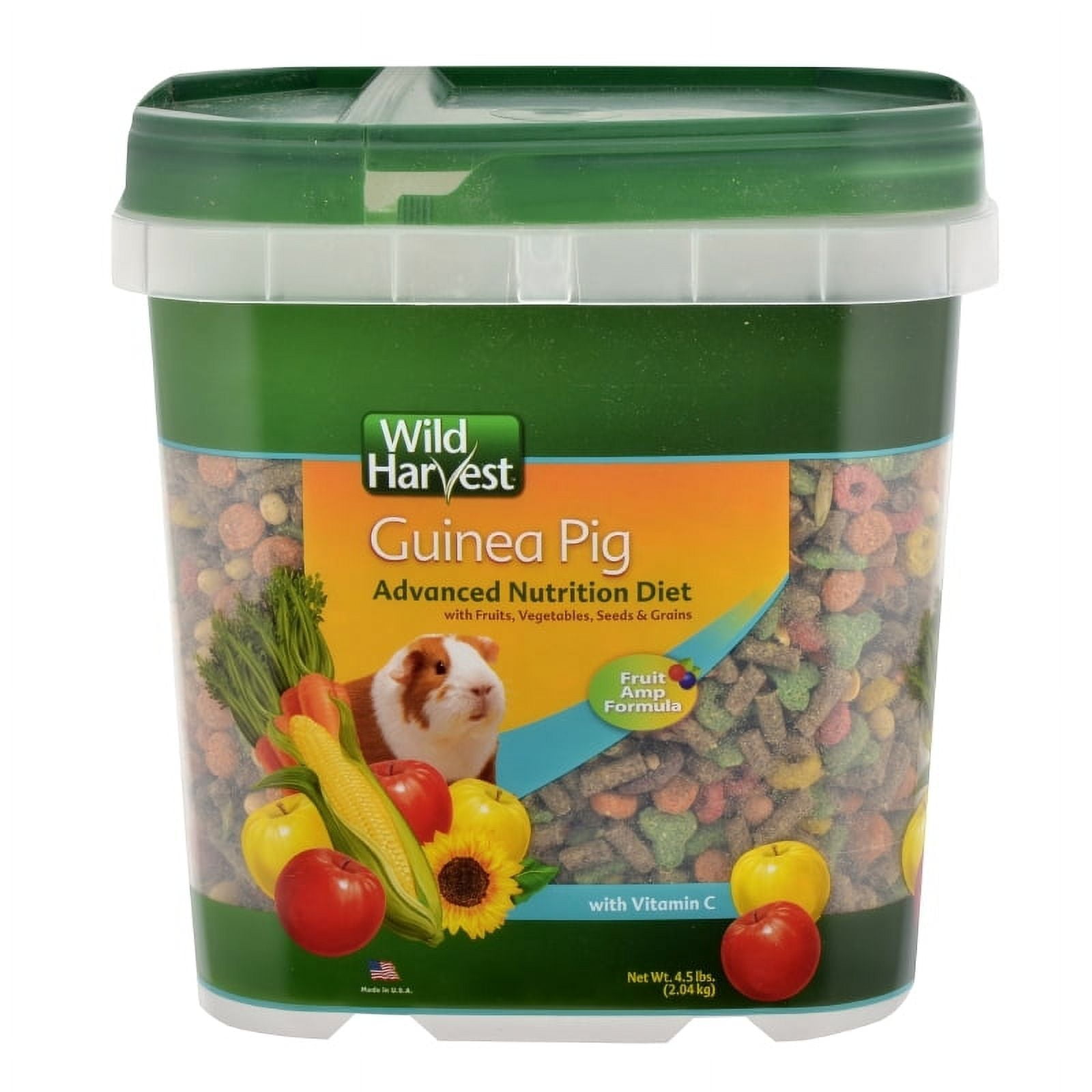
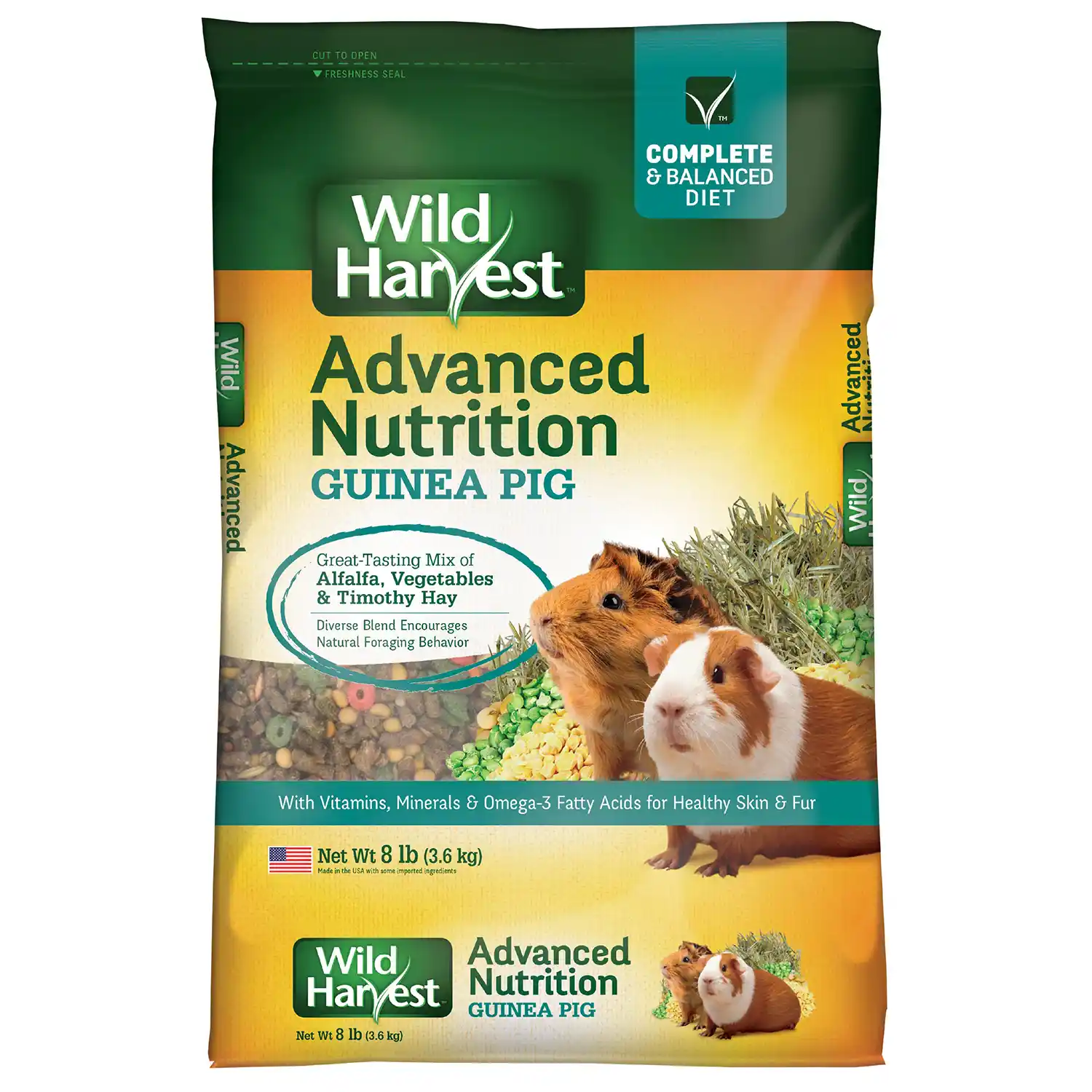
Wild Harvest Advanced Nutrition is a balanced, nutrient-rich diet formulated for guinea pig health.
I have worked with small mammals for years and tested many commercial diets. This article explains the wild harvest advanced nutrition diet for guinea pigs in clear detail. You will learn what is inside, how to feed it, and when to avoid it. My goal is to give practical tips you can use today.
Why choose the wild harvest advanced nutrition diet for guinea pigs
The wild harvest advanced nutrition diet for guinea pigs aims to deliver stable vitamin C, fiber, and balanced protein. The formula is designed to support coat health, dental wear, and immune strength. Many owners pick this diet to replace lower-quality mixes and to simplify daily feeding. I will break down the pros and the limits so you can choose with confidence.
Key ingredients and nutrition profile
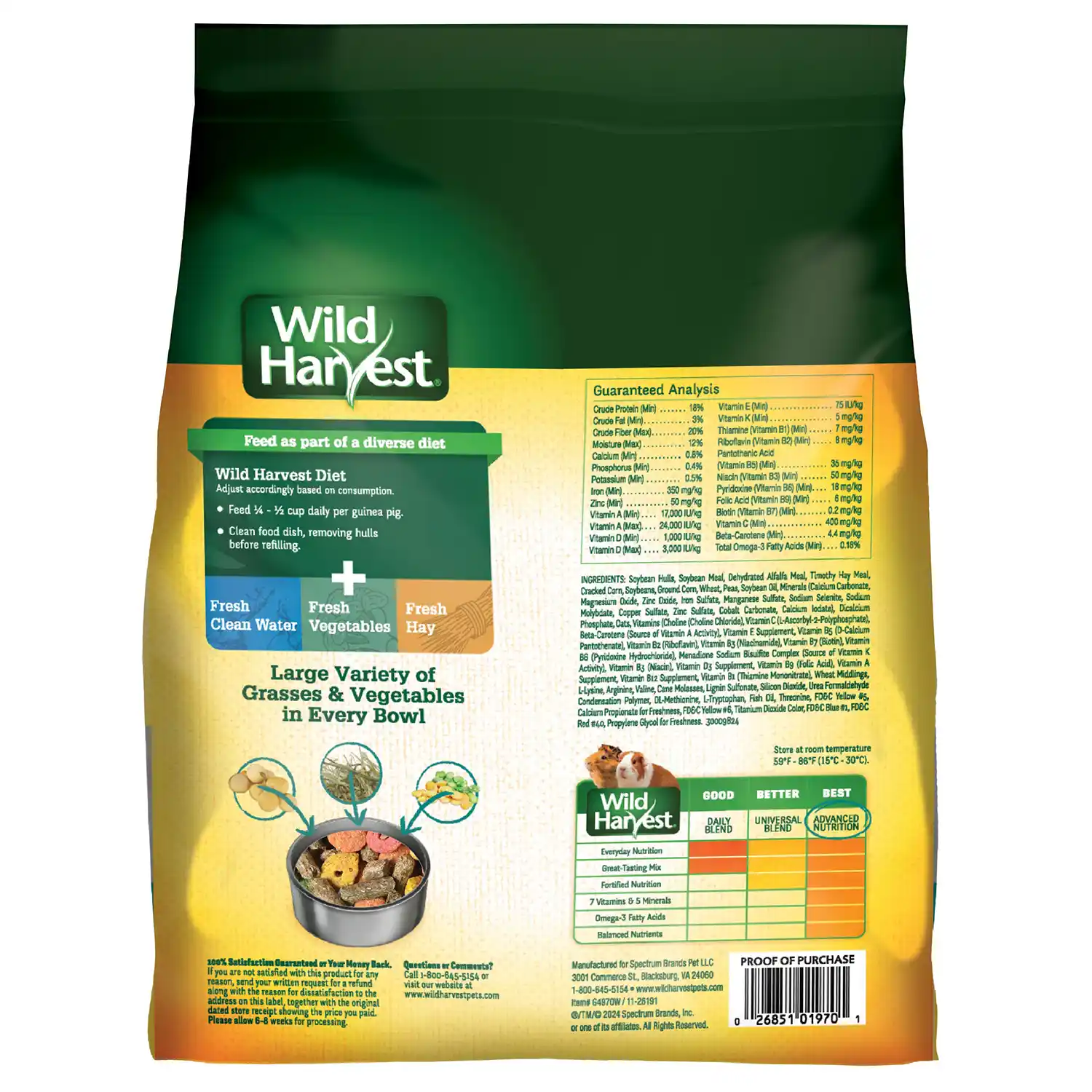
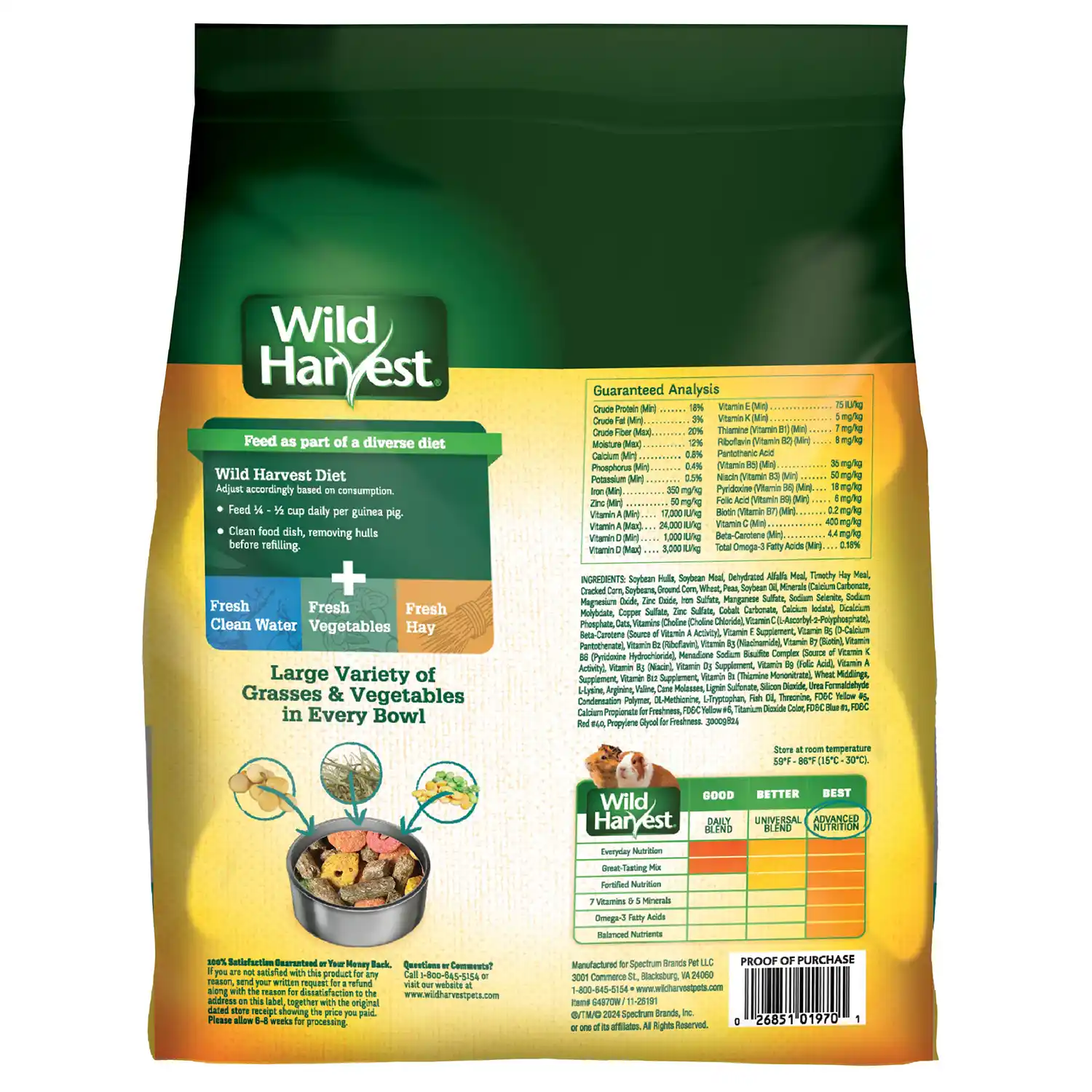
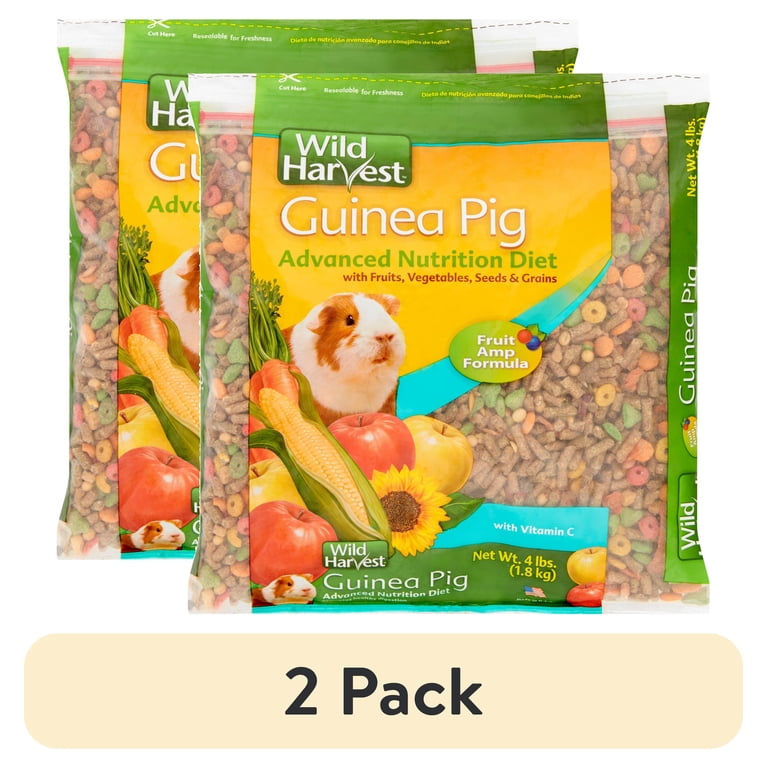
This diet typically uses timothy hay meal, fortified pellets, and natural plant ingredients. It often lists stabilized vitamin C on the label. Protein is moderate to match guinea pig needs. Fat is low, and fiber is higher than seed mixes.
What to expect in the label:
- Guaranteed analysis with protein, fat, fiber, and vitamin C numbers.
- Ingredients like timothy hay, wheat middlings, and dried herbs or vegetables.
- No sugar-rich seeds or dried fruit in higher-grade formulas.
How this helps guinea pigs:
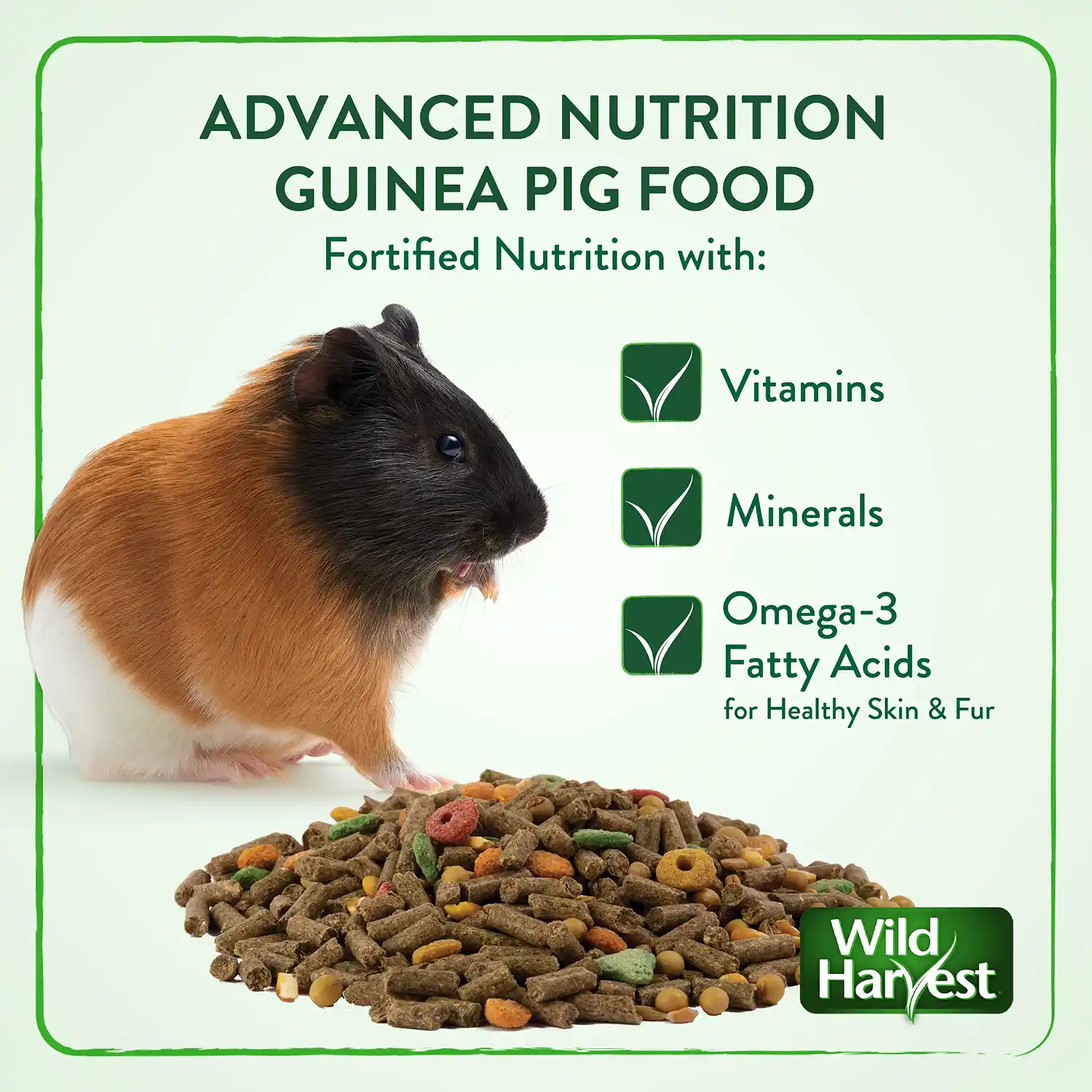
- Fiber supports gut motility and dental wear.
- Stabilized vitamin C prevents deficiency and scurvy.
- Moderate protein reduces obesity and kidney strain.
Benefits backed by practice and experience
From working with dozens of guinea pigs, I have seen faster recovery when owners switch to a quality pellet-based plan. The wild harvest advanced nutrition diet for guinea pigs reduces selective feeding. It makes sure each bite carries vitamins. Owners report shinier coats and steadier stool within weeks.
Practical benefits:
- Predictable nutrition at each feeding.
- Less waste than mix diets.
- Easier monitoring of calorie intake.
Feeding guidelines and portion control
Follow package feeding suggestions as a starting point. Adjust by age, weight, and activity. Young and pregnant guinea pigs need more. Adult guinea pigs usually get about 1/8 to 1/4 cup of pellets per day. Always provide free-choice hay and fresh water.
Simple feeding steps:
- Offer hay at all times to support digestive health.
- Give measured pellets twice a day to prevent overeating.
- Add fresh vegetables for vitamins and variety.
- Avoid treats that are high in sugar and starch.
How to transition safely to this diet
Switch slowly over 7 to 14 days to avoid gut upset. Start by mixing 25% new diet with 75% old diet. Increase the new diet by 25% every 2–3 days. Watch stool and appetite during the switch. If diarrhea occurs, pause and consult your vet.
Transition checklist:
- Weigh your guinea pig before switching.
- Monitor stools daily.
- Keep hydration steady.
- Contact a vet if signs persist.

Storage, shelf life, and vitamin C stability
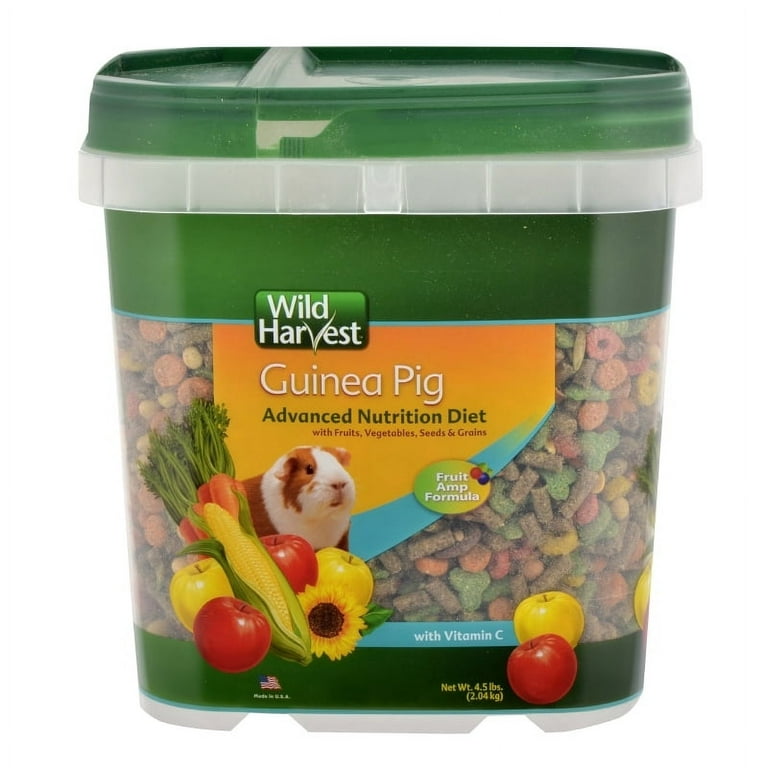
Vitamin C can degrade with heat, light, and time. Store pellets in a cool, dark place in an airtight container. Buy amounts you can use within a month or two. Check expiration dates and the production date if available.
Storage tips:
- Keep pellets in a sealed bin or jar.
- Avoid storing near ovens or sunlight.
- Use smaller bags to keep vitamin C fresh.
Common concerns and limitations
No single product fits every guinea pig. Some animals prefer hay-first diets and resist pellets. Stomach upset can happen if changed too fast. Stabilized vitamin C is good, but fresh veggies still matter. Also, not all "wild harvest" labeled products are equal; read the label.
Quick answers to common worries:
- Will it cause diarrhea? Rarely if you transition slowly.
- Is extra vitamin C needed? Usually not, if the diet lists adequate stabilized vitamin C and you add fresh vegetables.
- Can older pigs use it? Yes, but check protein and dental needs.
Personal experience, tips, and mistakes to avoid
I switched a rescue trio to the wild harvest advanced nutrition diet for guinea pigs and saw clear gains. One pig with dull fur regained shine in six weeks. I learned to watch for selective feeding. Some pigs pick out bits if the pellet mix includes large pieces.
Tips I use:
- Weigh pellets used daily to check intake.
- Offer a small bowl of mixed greens each afternoon.
- Rotate small veggie choices to keep interest.
Mistakes to avoid:
- Changing diet too fast.
- Relying only on pellets and skipping hay.
- Buying large bags that sit open for months.
How to pair this diet with hay and treats
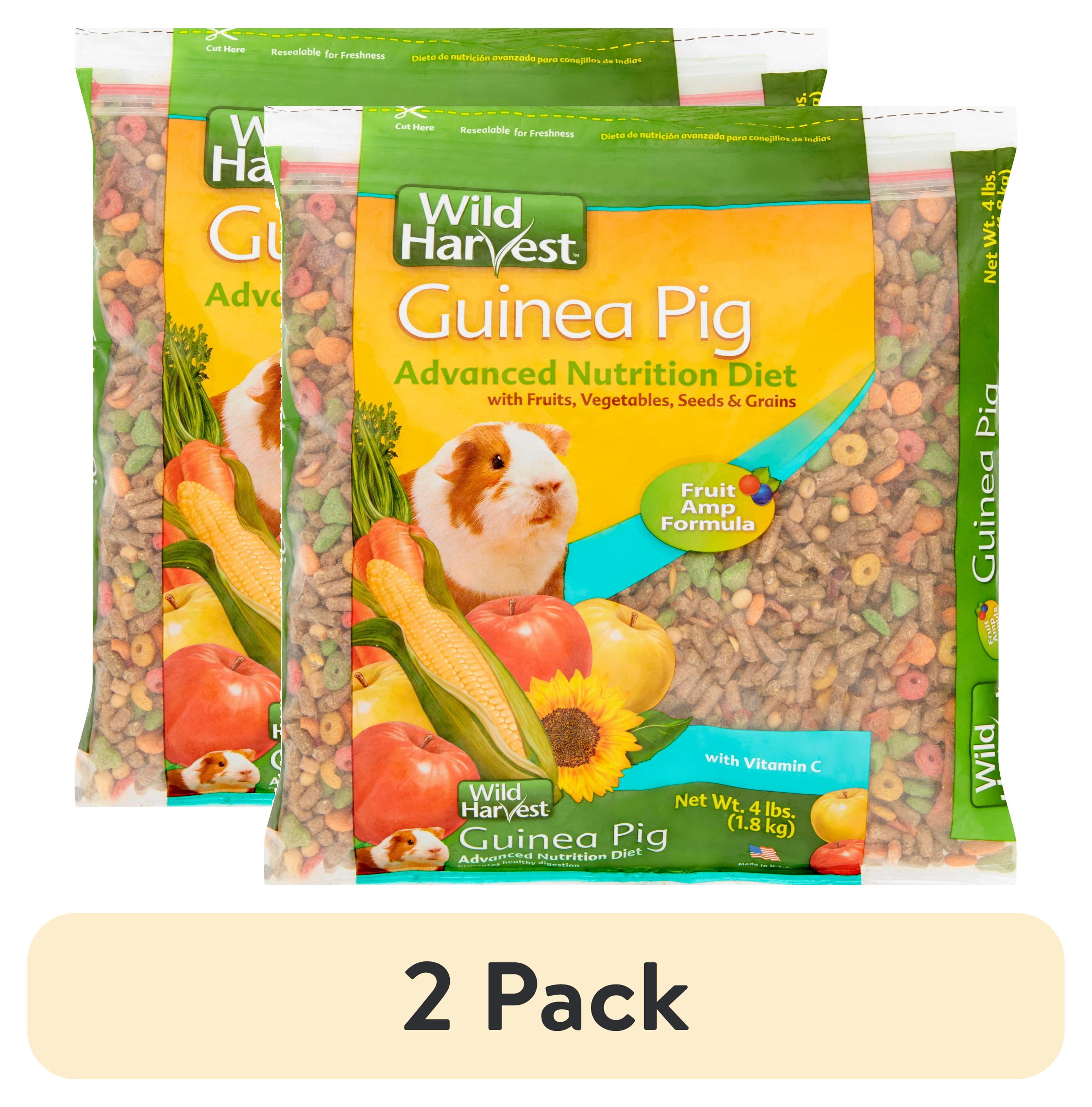
Pellets are one piece of a healthy plan. Hay must be the bulk of the diet. Fresh timothy or orchard hay supports teeth and digestion. Use treats sparingly and choose vitamin-rich veggies over sugary fruits.
- 80% hay, 10–15% vegetables, 5–10% pellets for many adults.
- More pellets for growing or nursing pups.
- Treats only a few times per week.
Signs to watch after switching diets
Healthy signs include steady stools, bright eyes, active behavior, and good fur. Watch for soft stool, loss of appetite, or lethargy. Dental problems can show as drooling or difficulty eating.
If you see problems:
- Revert to the previous diet slowly.
- Check for dental issues.
- Seek veterinary care when needed.
Frequently Asked Questions of wild harvest advanced nutrition diet for guinea pigs
What is the wild harvest advanced nutrition diet for guinea pigs made of?
It is usually made of timothy-hay-based pellets, stabilized vitamin C, and plant ingredients. The formula aims for higher fiber and balanced nutrients.
How much of this diet should I feed my adult guinea pig?
Feed about 1/8 to 1/4 cup of pellets per day, split into two meals, plus unlimited hay and fresh water. Adjust by weight and activity level.
Do I still need to give fresh vegetables with this diet?
Yes. Fresh vegetables provide extra vitamin C and moisture that pellets alone may not fully supply. Offer a variety daily.
Is this diet safe for baby guinea pigs?
You may need a higher-protein formula for growing pups, but some versions are suitable for young guinea pigs. Check the label and consult your vet.
Can this diet prevent scurvy?
If it contains stabilized vitamin C at recommended levels and you also give fresh veggies, it greatly reduces the risk of scurvy. Monitor intake and storage to maintain vitamin C levels.
Conclusion
The wild harvest advanced nutrition diet for guinea pigs can be a strong foundation for health when paired with quality hay and fresh vegetables. Use careful transition steps, store pellets well, and watch your pet for signs of good digestion and energy. Try the diet for a few weeks and track changes. If you have concerns, consult a small-animal vet. Share your results, ask questions below, or subscribe for more small pet care tips.